Why LiveGood Products Are Safe — and Smart — for Your Charity to Promote
One of the first questions we hear from charities, schools, and community organisations considering the LiveGood Fundraiser programme is: "Can we really put our name behind these products?"
It's not just a fair question — it's the right question. Your organisation has spent years, maybe decades, building trust with your community. One poorly judged partnership can undermine all of that. We take that seriously, and we'd never ask you to promote anything we weren't completely confident in ourselves.
So let's go deep. Here is the full picture on LiveGood — what makes them different, how they prove it, and why we believe they represent one of the few supplement brands in the world that a charity can genuinely stand behind.
The Problem with the Supplement Industry
Before we talk about why LiveGood is different, it helps to understand what most of the supplement industry looks like — because the contrast matters.
The global dietary supplement market is worth over £150 billion a year. With that kind of money on the table, it has attracted its share of misleading products, aggressive marketing, and cut corners. Here are some of the most common problems:
Underdosed ingredients
Many supplement brands include an ingredient on the label at a dose so low it would have no measurable effect in the body. They can still legally list it. It looks impressive on paper. It does nothing in practice. This is sometimes called "fairy dusting" — adding a trace of something well-known to make a formula look more impressive than it is.
Proprietary blends
A "proprietary blend" is a group of ingredients listed on the label under a single branded name — but without disclosing how much of each ingredient is actually present. For example, a label might say "Immune Support Blend — 500mg" containing elderberry, zinc, and vitamin C. But you have no idea if there's 400mg of cheap filler and only trace amounts of the actives. The brand isn't required to tell you.
Contamination and heavy metals
Supplements are not pharmaceuticals — in most countries, they don't go through the same pre-market approval process. Independent investigations have found some supplements contaminated with heavy metals like lead, arsenic, and cadmium, particularly in products sourcing ingredients from unverified supply chains. In 2023, Consumer Reports tested dozens of popular supplements and found concerning levels of heavy metals in several well-known brands.
No third-party testing
Most supplement brands test their own products in-house. That's a bit like marking your own homework. Independent, third-party testing — where an accredited external lab verifies what's in the bottle — is the gold standard. Most brands don't do it, or if they do, they don't publish the results where customers can see them.
Misleading health claims
Phrases like "boosts your immune system," "supports brain health," or "burns fat naturally" sound compelling. Regulators in the UK and US have clear rules about what supplement brands can and can't claim. But enforcement is patchy, and many brands push right up to — and sometimes beyond — those limits.
For a charity, this landscape is genuinely hazardous. Recommend the wrong brand, and you're not just putting your supporters at risk — you're staking your reputation on it.
How LiveGood Was Built to Be Different
LiveGood was founded with a specific mission: to make the highest-quality supplements in the world and make them affordable — without compromising on either.
Their model is different from most supplement companies in a fundamental way. Instead of spending money on celebrity endorsements, TV advertising, influencer campaigns, and luxury packaging, they put that budget into the product itself — better ingredients, higher doses, more rigorous testing. This isn't just marketing language. It's reflected in their pricing, their transparency, and the results their members report.
Here's how they make that commitment tangible:
1. Full Ingredient Transparency — No Proprietary Blends
Every single LiveGood product lists the exact milligram amount of every active ingredient. No proprietary blends. No hidden formulas. No vague "complex" catch-alls. If you pick up a LiveGood product, you can look up every ingredient at the dose listed and find independent research supporting it.
This matters because it means you can have an informed conversation with your GP, pharmacist, or a nutritionist about exactly what you're taking. You're not guessing. You're not trusting a brand's word. You can verify it yourself.
For a charity recommending these products, it means you're never in the position of saying "I don't really know what's in it." You always know. It's all there.
2. Independent Third-Party Testing — Published Publicly
This is perhaps the most significant differentiator. LiveGood doesn't just test their products — they publish the independent third-party test results publicly on their website for anyone to see.
Their testing covers:
- Potency testing — confirming that the ingredients are present at the doses shown on the label
- Purity testing — verifying the product isn't contaminated with unlisted substances
- Heavy metals testing — checking for lead, arsenic, mercury, and cadmium
- Glyphosate testing — screening for the agricultural herbicide that has raised health concerns in recent years
- Toxicity testing — ensuring there are no harmful compounds present
- Microbial testing — checking for harmful bacteria, yeast, and mould
These tests are conducted by accredited independent laboratories — not in-house. The results are accessible. That level of accountability is rare in this industry. It's the kind of thing you'd expect from a pharmaceutical manufacturer, not a supplement brand.
For a trustee, a school governor, or a charity CEO weighing up a partnership, that's the kind of receipts you want to see.
3. Certified Organic Ingredients
Where applicable, LiveGood uses 100% certified organic ingredients. Their Super Greens product — one of their most popular — is USDA Organic certified. That's not a logo you can just put on a label. It requires annual inspection and rigorous documentation of the entire supply chain, from the soil the ingredients are grown in to the processing facility.
Organic certification addresses several concerns in one go: no synthetic pesticides, no artificial fertilisers, no GMO ingredients. For supporters who are conscious about what they put in their bodies, that certification carries real weight.
4. Pharmaceutical-Grade Manufacturing Standards
LiveGood sources ingredients to pharmaceutical-grade standards from verified, traceable supply chains. Their manufacturing facilities adhere to Good Manufacturing Practice (GMP) — the same production standards required for prescription medicines in many territories.
GMP certification requires:
- Documented quality control processes at every stage of production
- Validated cleaning and sanitation procedures
- Tested and calibrated equipment
- Staff training and qualification standards
- Batch traceability — the ability to trace any product back through the full production chain
This isn't a badge a brand can self-apply. It involves external audits and ongoing compliance. It means the product you receive has been made with the same discipline applied to medicines — not the cut-rate production processes used by some budget supplement brands.
5. Formulated by Medical and Nutrition Experts
LiveGood's product formulations are developed in consultation with doctors, pharmacists, and nutrition scientists. Their advisory team includes medical professionals who review the research literature and apply evidence-based dosing — not trendy ingredients, not marketing-driven choices, but what the science actually supports.
This is reflected in the product range. You won't find gimmicky "superfood blends" or exotic ingredients chosen because they sound impressive. You'll find well-researched compounds at doses that align with what clinical studies have actually examined.
The People Behind the Products
Quality doesn't come from branding or marketing copy — it comes from the people formulating the products and the standards they hold themselves to. LiveGood's product development team is one of the most credentialled in the independent supplement space.
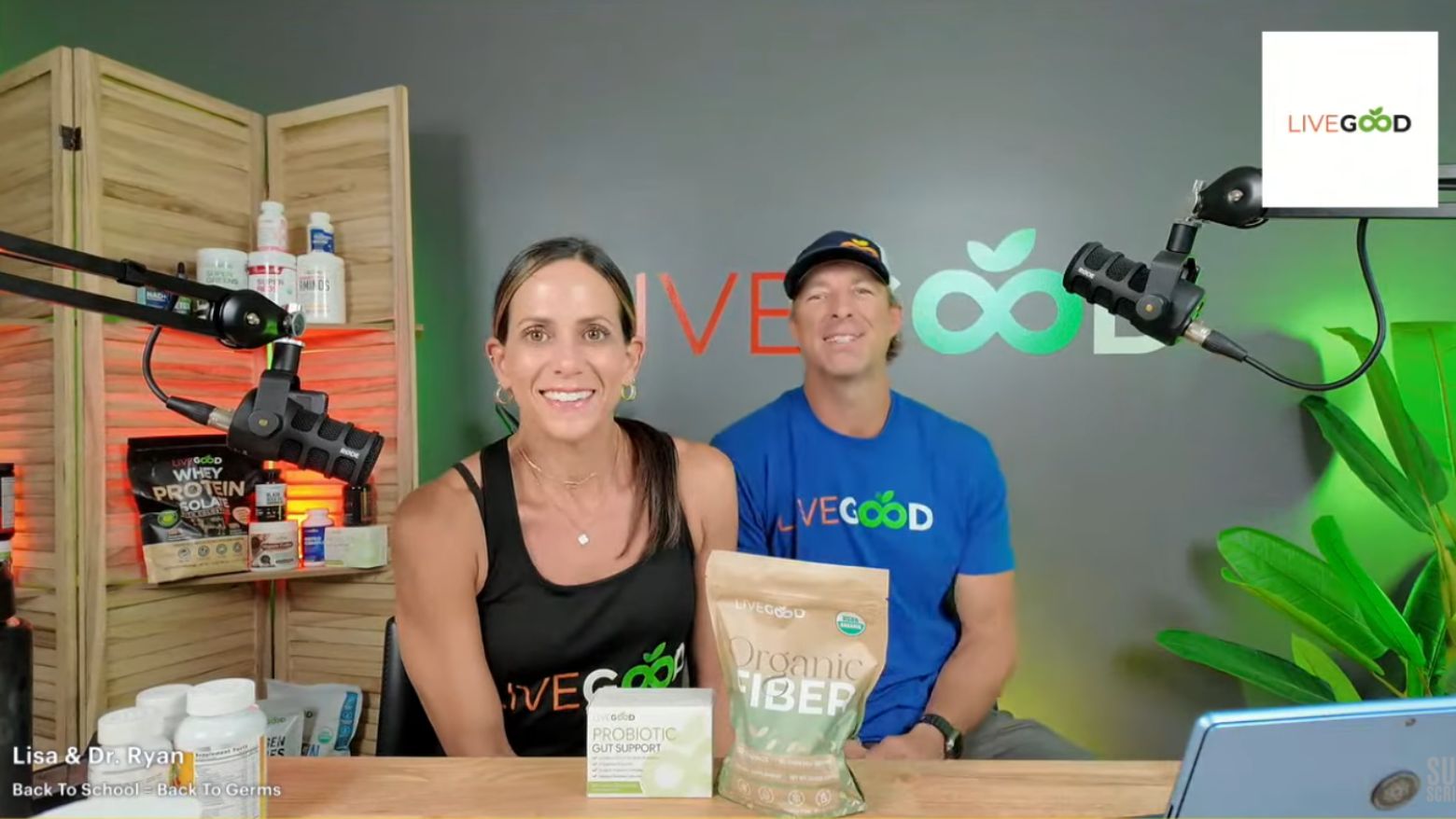
Dr Ryan Goodkin — Director of Product Development
Dr Ryan Goodkin holds a doctorate in pharmacy from Palm Beach Atlantic University and a degree in science and nutrition from Florida State University. That combination — clinical pharmacist and natural health practitioner — is genuinely unusual and directly relevant to what makes LiveGood different.
As a pharmacist, Ryan understands drug-nutrient interactions, contraindications, and the science of bioavailability at a level most supplement formulators don't. As a natural health practitioner, he has spent years recommending supplements to patients and understanding what actually works in practice, not just in theory.
His frustration with the supplement industry on two specific points led directly to LiveGood being founded:
- High-quality supplements are often prohibitively expensive, putting them out of reach for many people who need them
- Even many high-quality products could be formulated better — different ingredient forms, adjusted doses, smarter combinations
Every LiveGood product has been hand-formulated by Ryan personally, using what he describes as the highest quality ingredients from the purest sources globally. His standard is simple and worth quoting directly:
"I don't create products to sell. I create products to USE, and for my family to use. There is no way I am going to let my family put something in their body that I don't trust 100%. That's why I started LiveGood. I formulated every product. I know exactly what is in them. And I would not go a day without them!"
— Dr Ryan Goodkin, Director of Product Development
That's the kind of accountability statement that matters. Not a marketing slogan — a pharmacist staking his professional reputation and his family's health on the products he creates.
Lisa Goodkin — Director of Product Education
Alongside Ryan, his wife Lisa Goodkin leads product education at LiveGood. Lisa holds a Master's Degree in Exercise Physiology, a degree in Science and Nutrition, and has over 20 years of experience in the health and wellness industry. She is, in short, someone who has spent her career understanding how the body works and what it needs to perform at its best.
What Lisa brings to LiveGood is critical for anyone recommending these products: accessible, evidence-based education. She produces content — training materials, videos, and guidance — that explains not just what the products contain, but why those ingredients matter, how they work in the body, and how to get the best from them.
This is particularly relevant for the LiveGood fundraiser programme. Charities and schools don't need to become supplement experts to participate — but if your supporters want to go deeper, that educational resource is there. Lisa's materials are available to LiveGood members and affiliates, providing a level of transparency and support that simply doesn't exist with most supplement brands.
Between Ryan's formulation credentials and Lisa's education leadership, LiveGood has a product team whose qualifications and public visibility create genuine accountability. These are real people, with real credentials, publicly associated with these products. That matters when you're assessing whether a brand can be trusted.
A Closer Look at the Products
Let's make this concrete. Here's a brief overview of the key LiveGood products your supporters might purchase through the programme, and why each one stands up to scrutiny:
Bio-Active Complete Multi-Vitamin
A comprehensive daily multivitamin containing over 20 vitamins and minerals at meaningful doses — not the tokenistic amounts you find in most supermarket multivitamins. It includes a full B-complex, fat-soluble vitamins (A, D, E, K), and essential minerals including zinc, magnesium, and selenium. Separate formulas for men and women reflect the different nutritional requirements at different life stages. Every ingredient, every dose, fully disclosed.
Super Greens
A USDA Organic certified greens powder combining 35+ whole food ingredients including spirulina, wheatgrass, barley grass, chlorella, and a range of adaptogenic herbs. Third-party tested for heavy metals and glyphosate. This is the kind of product that frequently scores extremely well in independent comparative tests — largely because it doesn't cut corners on either the quality or quantity of what goes in.
Complete Plant-Based Protein
A clean plant protein blend delivering 20g of protein per serving from a combination of organic pea protein and organic brown rice protein — providing a complete amino acid profile. No artificial sweeteners, no synthetic colours. Just a straightforward, well-formulated protein that works for vegans, vegetarians, and anyone looking for a cleaner alternative to whey.
D3-K2 2000
Vitamin D3 at 2,000 IU paired with Vitamin K2 (as MK-7) — a clinically supported combination. Vitamin K2 is included because research shows it works alongside D3 to direct calcium to the bones and away from arterial walls. Many budget vitamin D supplements skip K2 entirely; LiveGood includes it because it's the right thing to do for the person taking it. Paired with organic virgin coconut oil for optimal fat-soluble absorption.
Organic Super Reds
A nitric-oxide-boosting red superfood blend combining over 20 fruits, vegetables, and botanical extracts — including beetroot, pomegranate, açaí, and grape seed. USDA Organic certified. Formulated to support cardiovascular health, circulation, and energy levels. Again, fully disclosed ingredients at meaningful doses.
Essential Aminos
A complete essential amino acid (EAA) formula providing all nine essential amino acids your body can't produce on its own — in ratios based on current sports nutrition research. Whether your supporters are active gym-goers or simply want to support muscle recovery and protein synthesis as they age, this is a scientifically sound product at a price point that would usually buy you something far inferior.
Every product in the range follows the same principles: full transparency, independent testing, evidence-based formulation, clean ingredients. The range is coherent and purposeful — not a random collection of trending products slapped together to fill a catalogue.
Common Questions Charities Ask — Answered Honestly
When we speak to charity leaders, trustees, and school heads, a few concerns come up consistently. Here's how we address them:
"Are there any health risks we should know about?"
All supplements carry some degree of potential interaction with medications or pre-existing health conditions — that's true of virtually everything, including food. LiveGood's products are formulated conservatively, with doses that sit well within safe upper limits. The published third-party testing means there are no hidden contamination risks. As with any supplement, individuals with specific medical conditions or on prescription medication should check with their GP before starting anything new — and LiveGood's full ingredient transparency makes that conversation easy and straightforward.
"Could this affect our charitable status or reputation?"
Charities raising funds through commercial partnerships is well-established and fully legitimate. Charity Commission guidance recognises commercial trading as a valid fundraising approach provided it is managed properly. GiveGoodBack handles the affiliate relationship on your behalf — your charity simply promotes its unique link, and donations flow from commission earned. We recommend you run it past your trustees as you would any new fundraising activity, and we're happy to provide supporting documentation for that conversation.
"What if our supporters don't like the products?"
LiveGood offers a 90-day money-back guarantee on all products. If a supporter buys through your link and isn't satisfied, they can get a full refund. That removes the risk for individuals and protects your charity's relationship with its community. In practice, repeat purchase rates on LiveGood products are very high — because people notice the difference.
"Do we need to make any health claims ourselves?"
No. LiveGood's recommended promotional approach is simple: you share your unique link, explain that LiveGood is a high-quality supplement brand and that a portion of every purchase goes to your cause, and let LiveGood's own product pages do the explaining. You are not required to make any health claims. You don't need to become a product expert. You're simply directing people to a reputable brand and earning for doing so.
"What's the worst case scenario if we sign up?"
Honestly? You promote it, your community isn't interested, and you raise nothing. There is no cost to joining the programme, no minimum commitment, no contract. You can step back at any time. There's no financial risk. The reputational risk is the only real consideration — and that's precisely why we've gone into this level of detail about what LiveGood is and isn't.
Why Reputation is a Two-Way Street
Here's something worth considering from the other direction. In an environment where many charities are struggling to maintain reliable fundraising income — with declining high-street footfall, tighter budgets, and increasing competition for donations — the ability to offer something of genuine value to your community matters.
There's a real difference between asking for a donation and offering your supporters access to excellent products that they actually want, at prices that make sense, knowing a portion goes to your cause. The second model respects your supporters' intelligence. It treats them as people who want to contribute but also want value in return — not just goodwill transactions.
LiveGood's product quality, transparency, and pricing genuinely make that second model possible. Your supporters get something good. Your cause gets funded. And your organisation is seen as resourceful and aligned with real community benefit — not just with its hand out.
That's reputationally positive, not neutral.
The Bottom Line
Your organisation's reputation is everything. We understand that completely. That's why we only partner with LiveGood and why we've invested in understanding the brand in depth before building GiveGoodBack around it.
LiveGood offers:
- Full ingredient transparency on every product — no proprietary blends, no hidden doses
- Independent third-party test results published publicly, covering potency, purity, heavy metals, glyphosate, and toxicity
- USDA Organic certification on relevant products
- GMP-standard pharmaceutical-grade manufacturing
- Evidence-based formulations developed with medical and nutrition professionals
- A 90-day money-back guarantee
- A product range that generates genuine repeat purchases because it works
That is a standard that most supplement brands — even well-known, premium-priced ones — do not meet. It is the reason we are confident recommending LiveGood to schools, sports clubs, community groups, and registered charities alike. And it is why we believe your organisation can promote these products without reservation.
If you'd like to go deeper on any of this — see the third-party test results, ask about specific products, or talk through how the programme would work for your organisation — we're happy to have that conversation.
Get in touch with the GiveGoodBack team and let's talk.